By Christopher Sunday
If the Igala people expect justice, fairness and unity from the Okuns and Ebiras, then we must be ready to practise those same values among ourselves. It would be difficult to demand fairness from others while ignoring it within our own political community. Justice should not be something we ask for only when it concerns us. It must begin at home.
As Kogi East prepares for the 2027 senatorial election, this is a conversation we should be willing to have honestly. Our district is made up of nine local government areas and three federal constituencies: Dekina/Bassa, Ankpa/Omala/Olamaboro and Idah/Ofu/Igalamela-Odolu/Ibaji. Despite our different communities and political interests, we share one senatorial district and one common future. Every part of Kogi East deserves to feel that it belongs.
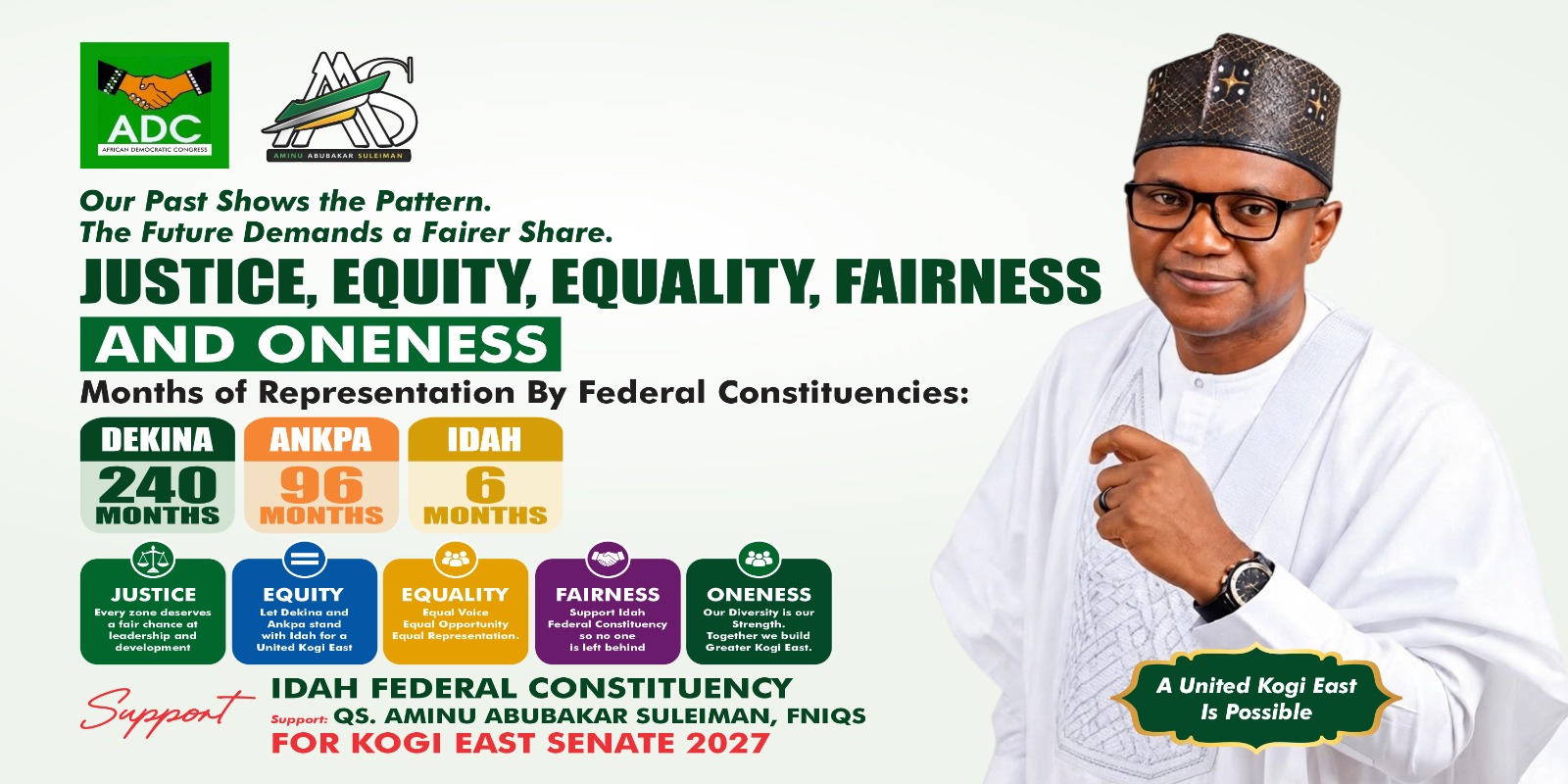
Since 1999, the history of senatorial representation in the district has raised questions about how political opportunities have been shared. Different parts of Kogi East have produced senators, but Idah Federal Constituency has had a particularly limited experience. In 2011, Senator Emmanuel Dangana Ocheja emerged from Idah, but his time in office was cut short by a legal dispute after approximately six months. That experience is part of our political history, and it is reasonable that people continue to discuss what it means for fairness and inclusion.
This is not about blaming Dekina or Ankpa, nor is it about dismissing the contributions of those who have represented the district. Every constituency has played its part in the development of Kogi East. But recognising past contributions should not prevent us from asking whether political opportunities have been fairly distributed.
Equity does not mean that a constituency must automatically produce the next senator. Neither should anyone be denied the opportunity to contest because of where they come from. What matters is creating a political environment where every community has a fair opportunity, where competence counts and where the people retain the freedom to make their choice.
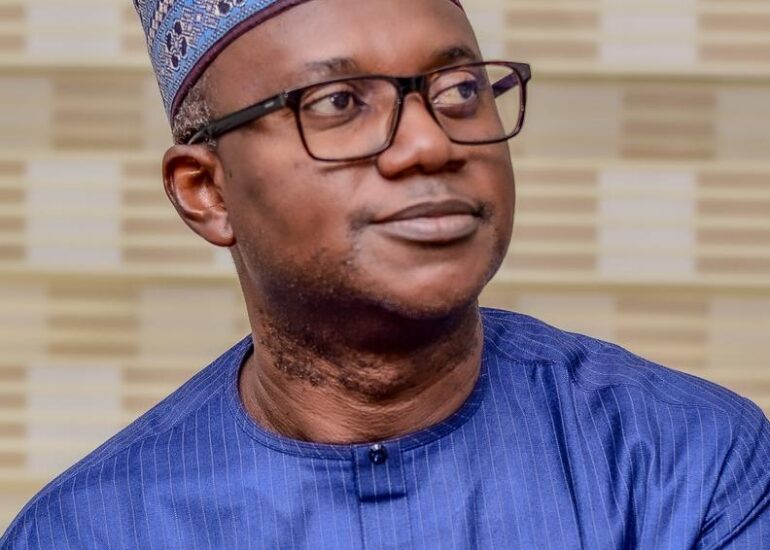
It is against this background that the 2027 senatorial candidacy of QS Aminu Abubakar Suleiman, FNIQS, under the African Democratic Congress, brings another dimension to the conversation. His manifesto, The People’s Mandate, places considerable emphasis on the kind of representation and development priorities that matter to the people of Kogi East.
The manifesto rests on four pillars: Responsive Legislation, Inclusive Economic Opportunity, Social Infrastructure and People-Centred Representation. Each addresses an important part of the relationship between a representative and the people.
Responsive Legislation is about making laws that speak to people’s realities, asking questions about public spending and ensuring that government institutions are held accountable. Inclusive Economic Opportunity recognises the need to create better opportunities for young people, women, artisans, persons with disabilities and small business owners. Social Infrastructure focuses on essential needs such as healthcare, education, roads and electricity. People-Centred Representation, perhaps the thread connecting the other three, is about accessibility, listening to communities and remaining accountable to the people.
QS’s professional background is also relevant to this discussion. His experience in quantity surveying, construction management, procurement and project management brings him into areas that are important to infrastructure planning, project costs and the responsible use of public resources. His campaign has also highlighted interventions in medical outreaches, educational support, youth development, women empowerment, assistance to small traders and community infrastructure. These activities form part of the public record through which his engagement with community needs can be examined.
Of course, there is a difference between helping people through personal or community interventions and representing them in the Senate. A senator does not personally build every road, run every hospital or execute every government programme. The responsibility is to make laws, scrutinise budgets, exercise oversight and engage the relevant institutions on behalf of the people. This is why the real test of The People’s Mandate will be how its promises are pursued through effective legislative work and accountability.
Beyond the candidacy of any individual, there is a lesson Kogi East must not overlook. We cannot continue to speak about unity while leaving questions of fairness unresolved. We cannot expect other communities to respect our aspirations if we are unwilling to recognise the aspirations of our own constituent communities. Unity is not simply about speaking the same language or sharing a common identity. It is also about making one another feel respected, heard and included.
The 2027 election gives Kogi East an opportunity to reflect on the kind of representation it wants and the issues it expects its next senator to address. The conversation should be about more than who occupies the seat. It should also concern the quality of legislation, economic opportunities, access to essential infrastructure and the willingness of the representative to remain connected to the people.
Dekina matters. Ankpa matters. Idah matters. Every local government area matters. No part of Kogi East should feel forgotten or less important.
At the end of the day, our strength as a people will not be measured only by the number of political offices we occupy. It will also be measured by how fairly we treat one another and how willing we are to make room for every community to participate in shaping our common future.
That is why the conversation about equity must continue. And that is the wider significance of The People’s Mandate in the 2027 senatorial debate.
Justice must begin at home. Representation must be inclusive. And our unity must be something we practise, not just something we talk about.