
By Christopher Sunday
In African thought, leadership is not merely an appointment; it is a sacred trust. “When the roots of a tree begin to decay, it spreads death to the branches,” the proverb warns, reminding us that institutions, like communities, thrive only under ethical and visionary stewardship. True authority is measured not by rank or title, but by service, foresight, and the capacity to transform lives. Another saying affirms, “A king who does not listen to his elders will one day hear the lamentations of his people,” emphasizing that humility, wisdom, and responsibility define enduring leadership.
It is within this ethical horizon that the recent history of Kogi State Polytechnic, Lokoja, must be understood. For years, the institution faced the twin challenges of infrastructural decay and declining academic confidence. What it needed was not administrative routine but restorative leadership — a custodian who could restore dignity, efficiency, and purpose. “The hand that rocks the cradle rules the world,” another African proverb teaches, and it was precisely this careful, transformative touch that guided the Polytechnic’s remarkable rebirth.
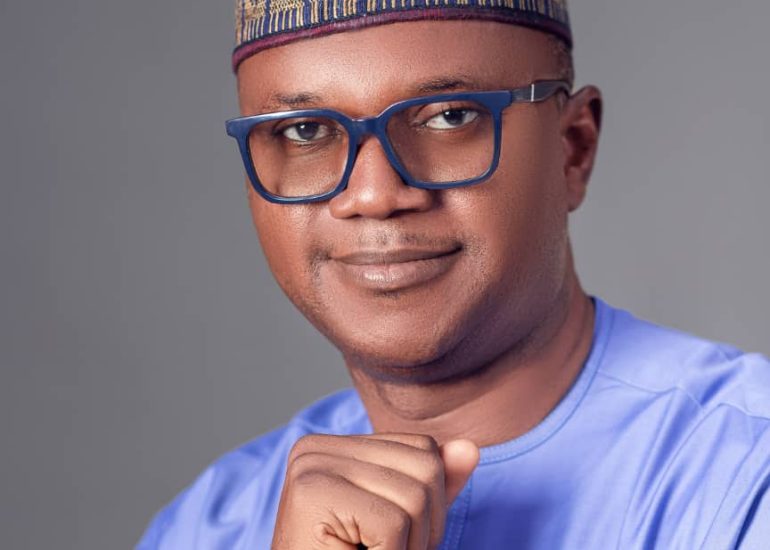
At the center of this transformation stands Professor Salisu Ogbo Usman, whose tenure as Rector over the last five years redefined the Polytechnic’s trajectory. Appointed at a moment when renewal was critical, he emerged not merely as an administrator, but as a visionary reformer. Guided by discipline, foresight, and moral responsibility, he restored academic standards, strengthened institutional structures, and repositioned the Polytechnic as a model of excellence in contemporary Nigerian higher education. “Wisdom does not come overnight,” and it was this patient, deliberate approach to reform that produced lasting results.
Professor Usman hails from Angwa Ogebe in Ankpa Local Government Area, Kogi State. A distinguished scholar, he obtained B.Sc. and M.Sc. degrees in Political Science from Bayero University, Kano, and the University of Ilorin, respectively. He later earned a PhD in Political Economy and Development Studies from Nasarawa State University, as well as a Postgraduate Diploma in Education from the University of Ilorin. His academic journey reflects intellectual depth, rigor, and a steadfast commitment to scholarship and institutional development.
His career in public service began in 2003 at the University of Ilorin, where he rose steadily through critical administrative roles, including Acting College Secretary of the College of Health Sciences and Faculty Officer of the Faculty of Basic Medical Sciences. These formative experiences laid the foundation for his later success in managing complex academic institutions.
In 2009, he joined Kogi State University, Anyigba (now Prince Abubakar Audu University) as an Assistant Lecturer. Through dedication and excellence, he advanced to Lecturer II, Lecturer I, Senior Lecturer, Associate Professor, and in 2024, was appointed Professor of Political Science by the Governing Council of Federal University Lokoja. His rise demonstrates a consistent pattern of diligence, integrity, and professional distinction.
Within the university system, Professor Usman served extensively at departmental, faculty, and institutional levels. As Head of the Department of Political Science, he led reforms that enhanced postgraduate programs, preserved full accreditation, and achieved a remarkable 96.4 percent success rate, a testament to disciplined leadership and strategic vision.
His appointment as Acting Rector of Kogi State Polytechnic on April 7, 2020, later confirmed as substantive Rector in February 2021 and reappointed in 2025, marked a new chapter in the institution’s history. Under his leadership, guided by the 3-R mantra of Repair, Reform, and Restore, the Polytechnic experienced a holistic transformation.
The physical renewal was impressive: modern academic buildings, upgraded facilities, and one of the most effective security architectures in state tertiary education. An institution once described as a “glorified secondary school” became a standard-bearer for higher education in Nigeria.
Equally remarkable was his impact on academic excellence. Programs achieved 100 percent full accreditation, new courses were introduced, Quality Assurance and Research & Innovation Directorates were established, and result processing was fully digitized. Transparency, efficiency, and confidence in academic processes were restored, creating an environment conducive to scholarship and innovation.
Professor Usman also exemplified the proverb, “If you want to go fast, go alone; if you want to go far, go together.” He fostered robust partnerships, reactivating agreements with the National Space Research and Development Agency (NASRDA) to establish the Mechatronic Engineering Technology program, and collaborating with Federal University Lokoja on degree programs, staff and student exchanges, and curriculum enrichment. These partnerships expanded research, innovation, and learning opportunities, strengthening the Polytechnic’s regional and national standing.
Throughout his public service, Professor Usman has never received a query, but has accumulated numerous letters of commendation for loyalty, diligence, and exemplary performance. He has been recognised with over 100 awards, including the Educational Administrator of the Year Award (2022) by the Nigerian Union of Journalists, and conferred with revered chieftaincy titles reflecting his deep engagement with the community.
As he prepares to assume office as the 6th Vice-Chancellor of Prince Abubakar Audu University, Anyigba, optimism runs high. His proven capacity for reform, innovation, and disciplined leadership promises to guide the University toward new heights of academic excellence, infrastructural growth, and global recognition.
In African wisdom, “A leader who does not serve will not be remembered; a servant-leader leaves a legacy.” Professor Salisu Ogbo Usman embodies this ideal. His tenure at Kogi State Polytechnic transformed the institution, and now, Anyigba awaits a leader whose vision, integrity, and service will continue to inspire generations.