

By Christopher Sunday
A manifesto becomes meaningful when the people can understand not only what a candidate promises to do but also how those promises will be pursued, the institutions that will be engaged and the mechanisms through which progress will be measured. For Kogi East, the central question surrounding QS Aminu Abubakar Suleiman’s The People’s Mandate is how its four pillars will be translated into practical policies and legislative action that address the needs of the people.
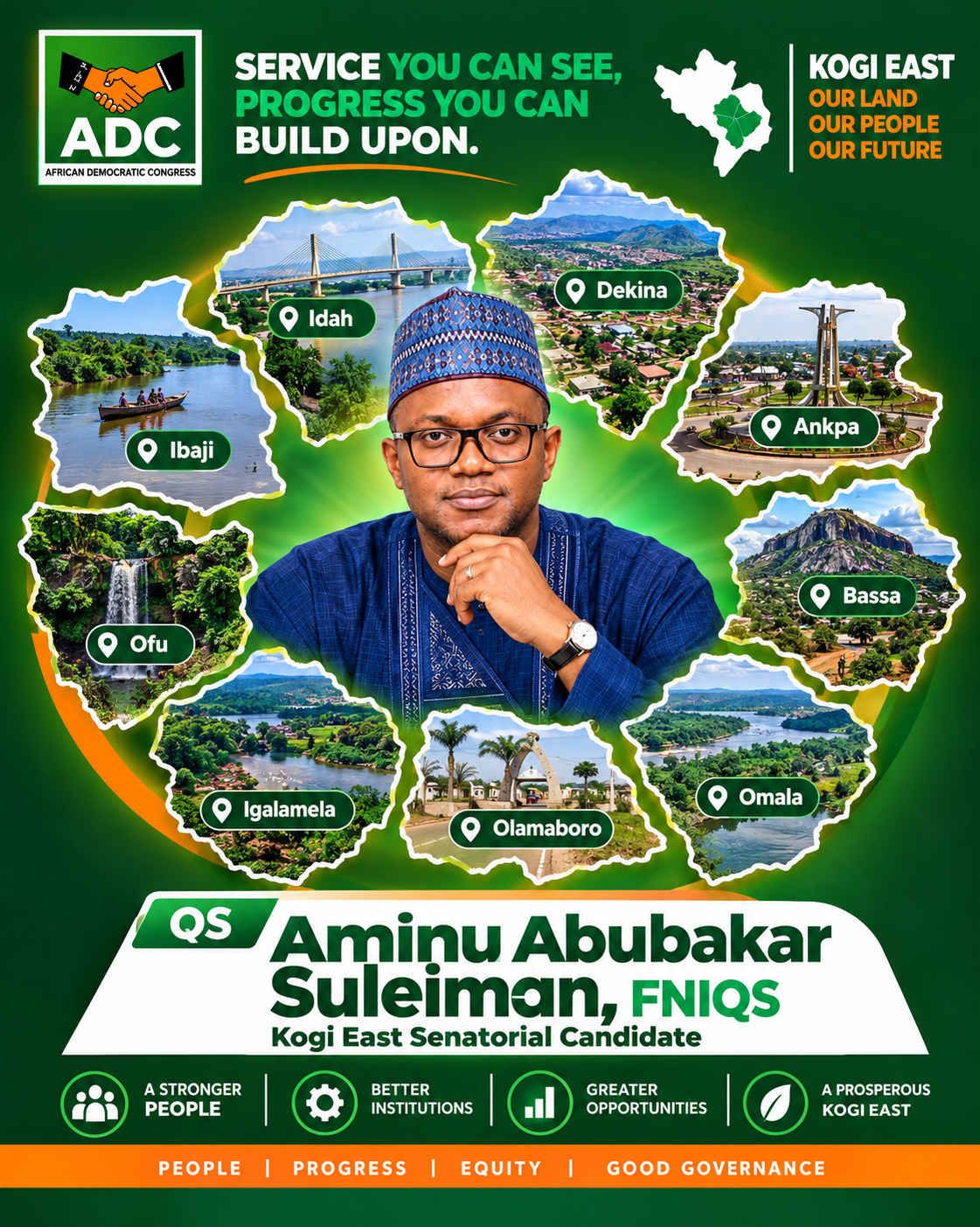
The four pillars, Responsive Legislation, Inclusive Economic Opportunity, Social Infrastructure and People Centred Representation, provide the framework. The next step is implementation: identifying priority issues, developing policy proposals, engaging the relevant institutions, pursuing appropriate legislative and budgetary channels, and establishing a transparent system for monitoring results.
Responsive Legislation: From Community Needs to Legislative Action
QS intends to pursue people centred representation through legislation that responds to the realities of Kogi East. To translate this commitment into action, the first step should be a structured process of identifying and documenting the concerns of constituents across the nine local government areas.
Through consultations with traditional institutions, community associations, professional groups, youth organisations, women’s groups, artisans and other stakeholders, recurring challenges can be identified and prioritised. These concerns can then inform proposed bills, motions, petitions, committee engagements and advocacy to relevant federal ministries, departments and agencies.
The objective is to ensure that issues affecting Kogi East do not remain isolated complaints but become subjects of sustained legislative attention. Progress can be measured through published records of constituency consultations, legislative initiatives, official submissions and responses from the institutions responsible for addressing identified concerns.
Inclusive Economic Opportunity: Connecting People to Economic Programmes
Economic opportunity requires more than promises of empowerment. It requires a practical approach to connecting people with the resources, skills and institutions that can improve their livelihoods.
Under this pillar, QS can pursue partnerships with relevant federal agencies, vocational training institutions, agricultural development programmes and enterprise support organisations. The purpose would be to improve access to skills acquisition, business development, agricultural support and other legitimate economic opportunities available to eligible constituents.
Artisans should be included through initiatives that improve access to vocational training, modern equipment, affordable financing and wider markets. Young people need opportunities to acquire employable skills and develop enterprises, while women and persons with disabilities should have fair access to relevant programmes.
The implementation process should include publicising available opportunities, explaining eligibility requirements, facilitating access to application channels and monitoring the delivery of programmes by the responsible institutions. Where necessary, QS can use legislative oversight and policy advocacy to question barriers that prevent eligible people from benefiting.
The expected outcome is not merely a list of beneficiaries but a more accessible and accountable system through which people can pursue sustainable economic opportunities.
Social Infrastructure: Using Legislative and Budgetary Channels
Social infrastructure requires a clear understanding of which institutions have responsibility for each proposed intervention. Roads, healthcare facilities, schools and electricity infrastructure may fall under different levels of government or different federal agencies. Identifying the responsible authority is therefore essential to turning a development priority into an actionable proposal.
QS can begin by documenting infrastructure needs across Kogi East and distinguishing federal responsibilities from state and local government responsibilities. For issues within federal jurisdiction, he can pursue engagement with the relevant ministries and agencies, advocate for appropriate inclusion in budget proposals, scrutinise allocations and use legislative oversight to monitor implementation.
For healthcare, this could involve advocating for improved access to eligible federal health interventions and support for facilities through the appropriate authorities. In education, it could mean pursuing relevant federal programmes, technical education opportunities and interventions for eligible institutions. For roads, it would require identifying priority routes, establishing the responsible government authority and pursuing the appropriate budgetary and institutional channels.
Where responsibility rests with the Kogi State Government or local authorities, constructive engagement and intergovernmental advocacy would be necessary. This approach would help ensure that promises are tied to the institutions capable of delivering them rather than presented as projects a senator can independently execute.
People Centred Representation: Building Accountability into Implementation
The final pillar provides the mechanism for ensuring that the other three are pursued in the public interest. QS can establish a system of regular constituency engagement and public reporting through which the people can track his legislative activities and the status of his commitments.
Such a system should distinguish between an issue identified, a proposal submitted, a budgetary provision secured, an intervention approved and a project completed. These are different stages of implementation and should be reported accurately.
Periodic reports should explain the issues raised by constituents, the actions taken, the institutions engaged, the responses received and the outstanding challenges. Public consultation should also continue after the election so that emerging concerns can inform subsequent legislative priorities.
This would give the people a practical basis for assessing representation rather than relying solely on campaign statements or political announcements.
From Four Pillars to a Working Implementation Framework
For The People’s Mandate to move from a manifesto to an operational framework, its implementation should follow a clear sequence.
First, identify and document the most pressing needs of the constituency through consultations and evidence gathering. Second, prioritise those needs according to urgency, public benefit and the constitutional responsibilities of the Senate. Third, develop specific policy proposals and determine the legislative, budgetary or institutional channels through which each can be pursued.
Fourth, engage the relevant federal agencies and other levels of government where cooperation is required. Fifth, monitor the progress of each intervention and publish periodic reports that enable constituents to assess what has been achieved, what remains outstanding and why.
This process would provide a practical link between the manifesto’s commitments and the responsibilities of the senatorial office. It would also make it easier to distinguish between actions within the senator’s direct legislative responsibilities and outcomes dependent on other institutions.
Ultimately, the success of QS Aminu’s proposed approach will depend on the specificity of its commitments, the consistency with which they are pursued and the transparency with which progress is reported. A manifesto should not be treated as a catalogue of promises but as a framework for identifying public problems, pursuing appropriate solutions and remaining accountable to the electorate.
For Kogi East, the essential question is not simply whether the four pillars sound desirable. It is whether each pillar can be supported by a clear implementation pathway, appropriate institutional engagement and measurable indicators of progress.
The People’s Mandate must move from aspiration to implementation: from identifying the people’s needs to pursuing legislative action, from policy proposals to institutional engagement, and from campaign commitments to public accountability. That is how a manifesto can become a working framework for representation.