
By Christopher Sunday
Department of General Studies
School of Social Sciences and Humanities
Kogi State Polytechnic, Lokoja, Kogi State

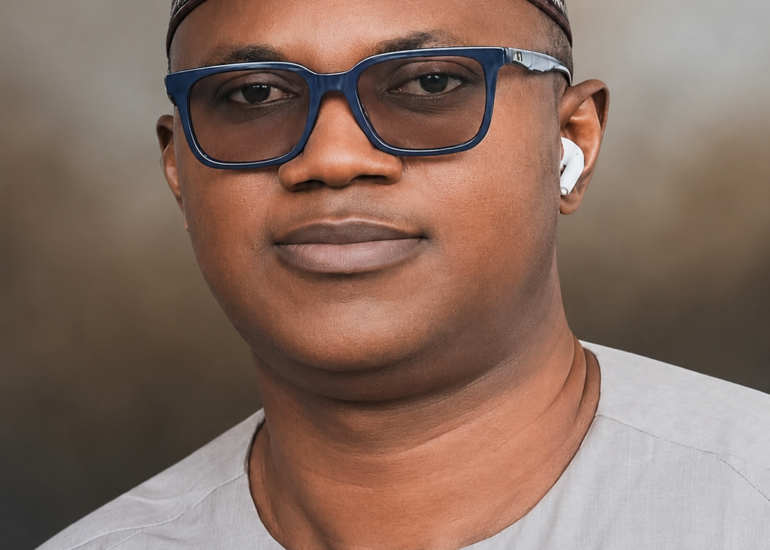
There is a difference between wanting public office and being prepared for the responsibility it carries. I have come to appreciate this distinction more closely through my interaction with QS Aminu Abubakar Suleiman, FNIQS, over the course of our media engagements, strategy sessions, public communication and campaign activities.
Working around a political candidate offers a different perspective from simply observing one from a distance. You hear the conversations that do not always make it into speeches. You see how issues are approached, how questions are answered and how ideas are translated into messages for the public. For me, that experience has provided an opportunity to look beyond the campaign image and consider the person, his professional background and the philosophy behind his aspiration to represent Kogi East in the 11th Senate.
There is an old philosophical principle that responsibility should correspond with capacity. The greater the responsibility entrusted to a person, the greater the preparation required to discharge it. Public office, therefore, should not be understood merely as a reward for political ambition. It is a trust.
This is the context in which I have come to understand QS Aminu’s candidacy.
The central question is not simply whether someone wants to become a senator. The more important question is whether the person understands what the Senate is and is prepared for the work that comes with membership of it.
A senator is not a governor. He does not personally execute every road project, install every transformer or construct every hospital. The Senate makes laws, represents citizens, scrutinises public expenditure and exercises oversight over government institutions.
That distinction changes how we should think about development.
Consider a federal road in Kogi East. A senator may not be the contractor who builds the road, but can participate in the legislative and budgetary processes through which federal interventions are provided for, advocate for the interests of affected communities and use oversight mechanisms to question implementation.
The same principle applies to electricity. A senator cannot, by legislative authority alone, switch on a transformer. But he can advocate for underserved communities, engage relevant federal agencies, participate in policy discussions and exercise oversight over programmes and expenditure.
Representation therefore requires more than the ability to make promises. It requires an understanding of the machinery through which public promises become public policy.
This is where QS Aminu’s professional background becomes relevant.
His career in quantity surveying, construction project management and infrastructure has exposed him to questions of measurement, costing, procurement, contracts, risk and project delivery. These may appear to be technical matters, but they are also fundamental questions of public governance.
Whenever government spends public money on infrastructure, somebody must ask: What is the cost? What is the value? Was the process properly conducted? Is the project being delivered? Who is accountable?
A professional accustomed to asking such questions brings a particular perspective to public affairs.
That, for me, gives substance to the philosophy behind the QS O’Clock message.
It is not merely about the timing of a political campaign. It is an argument about preparedness. It asks Kogi East to look at representation not only through the familiarity of names or the excitement of political contests, but through the demands of the institution and the capacity required to engage it.
Knowledge, however, is only the beginning. The philosopher does not merely seek to know; knowledge must ultimately inform action. In public life, knowledge without responsibility can become sterile, while power without knowledge can become wasteful.
The Senate requires the ability to understand complex national questions and connect them to the lived realities of constituents.
For Kogi East, those realities are not abstract. They include roads and transportation, electricity, water, healthcare, education, agriculture, employment, economic opportunity and the effective use of public resources.
The representative must therefore be able to move between two worlds: the world of the constituent who wants a road fixed and the world of the national institution that controls the policy, budget or agency through which that intervention may be pursued.
That bridge between the people and the institution is the essence of representation.
QS Aminu’s candidacy also carries a geographical dimension. He comes from the Idah Federal Constituency, one of the three federal constituencies that make up Kogi East Senatorial District. His aspiration consequently forms part of the wider conversation about inclusion, rotation and equitable political representation within the district.
But geography alone cannot be the whole argument.
The more substantive question is what a candidate brings to the responsibility.
Having worked with QS Aminu in the media space, I have observed a candidate who consistently seeks to frame his aspiration around professional competence, strategic legislation, federal advocacy and sustainable development. His proposed agenda addresses social infrastructure, human capital development, economic opportunity and institutional accountability.
Ultimately, the decision belongs to the people of Kogi East. No article, campaign organisation or individual should substitute its judgment for that of the electorate.
But an informed electorate deserves an informed conversation.
It deserves to ask not only who is seeking the Senate seat, but who understands the institution, who has relevant experience, what each candidate proposes to do and how those proposals fit within the constitutional responsibilities of the office.
That is the conversation surrounding QS Aminu.
For his supporters, his professional experience and institutional understanding constitute the foundation of a case for prepared representation in the 11th Senate.
A Senate seat is not a trophy. It is a trust.
And when a people entrust one person with their voice in the national legislature, preparation should matter.
Kogi East Deserves Her Own Senator.